Featured Artist Friday: Jeff Laclede

https://www.youtube.com/watch?v=xQUXFFm1YWA

This is the revival of a segment that used to be called “Favorite Artist Friday,” but it’s now called Featured Artist Friday.

Once a week, on a (surprise!) Friday, I’ll be writing about another artist. It doesn’t matter what medium or subject matter they choose. Any artist may be featured.

This week, I would like to talk about one of the coolest artists I know, Jeff Laclede.

Jeff is a digital painter, comic artist, and character designer. He is also, I dare say, masterful with his use of colors.

Every time I see one of his pieces, I am impressed with how well he lights his work, and how that light affects his subjects. Lighting is NOT easy, but Jeff makes it look easy, which is the mark of an excellent artist.

Not only does he illustrate very well, he is also an excellent writer.

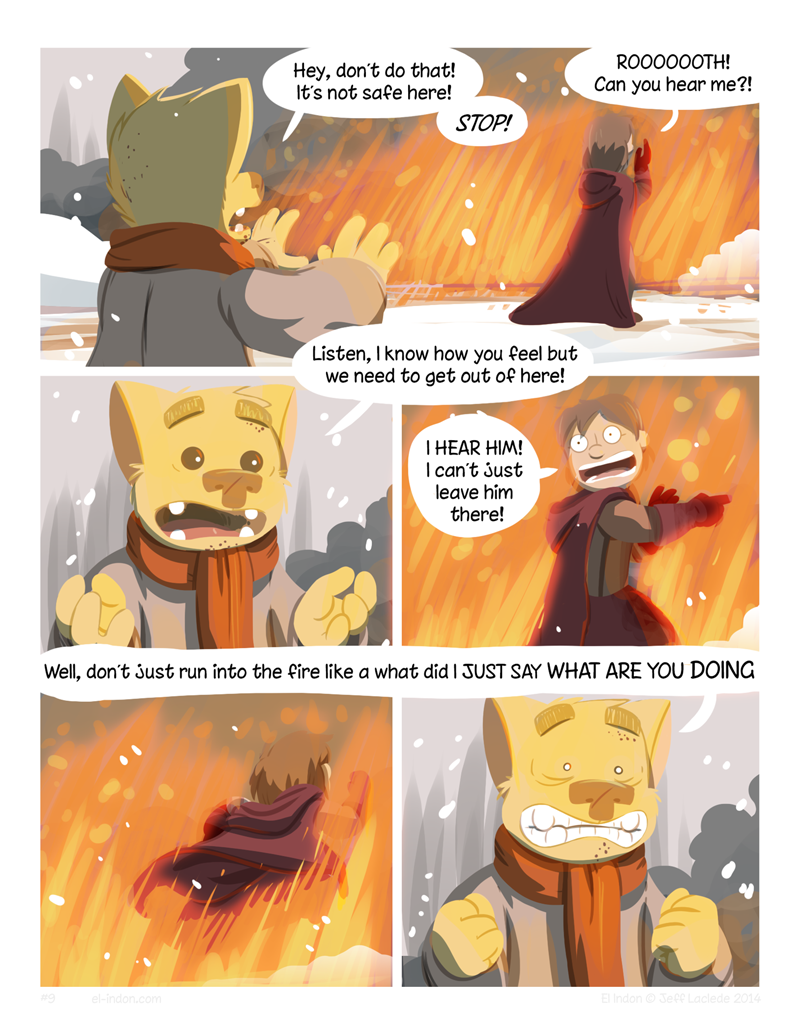
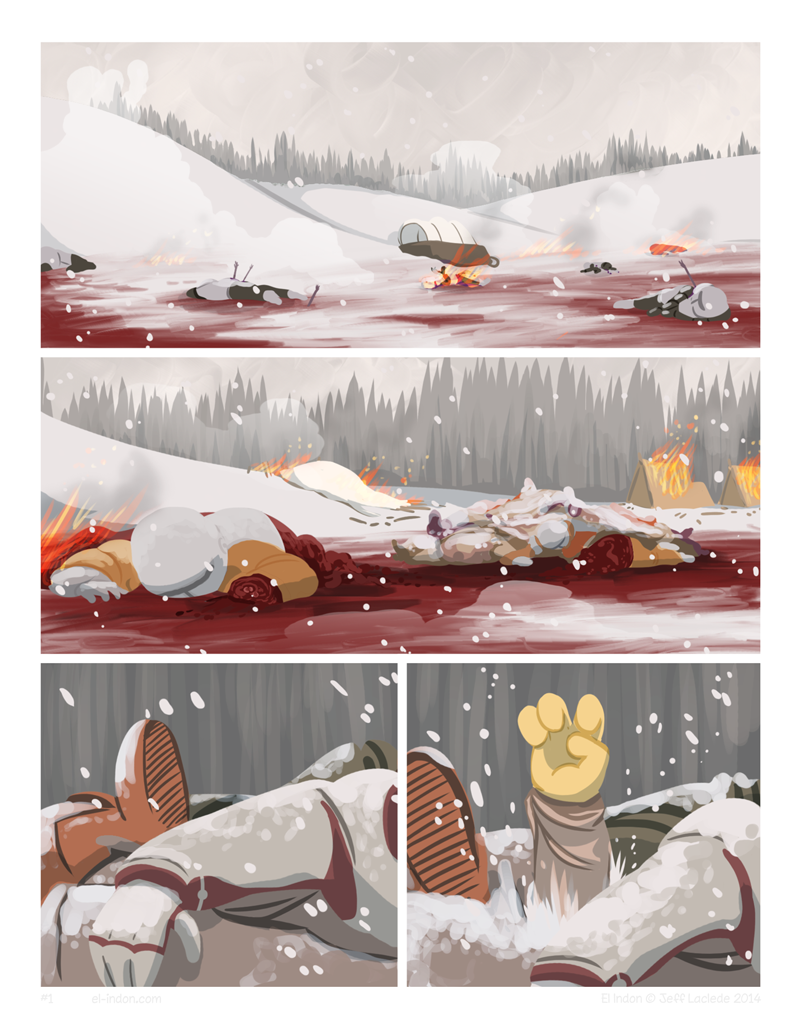
His current comics project is a webcomic called El-Indon. And it grabs you by the first page.

el indon webcomic page 1 by jeff laclede
El Indon, page 1.

And it gets better from there! His characters, aside from being well-designed and memorable, are hilarious.

el indon webcomic page 9 by jeff laclede
More El-Indon

He also a great world-builder. As you read his comics you can get sucked into the world he’s creating and the intrigue within it. And a lot of that is thanks to his attention to character, great page layout design, and thematic lighting and tones.

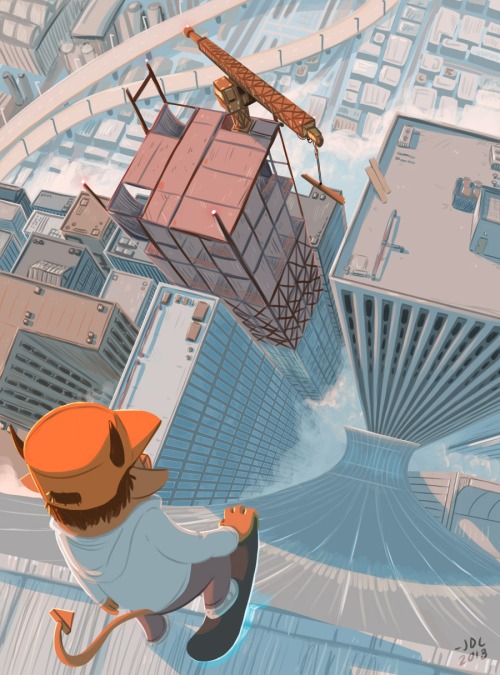
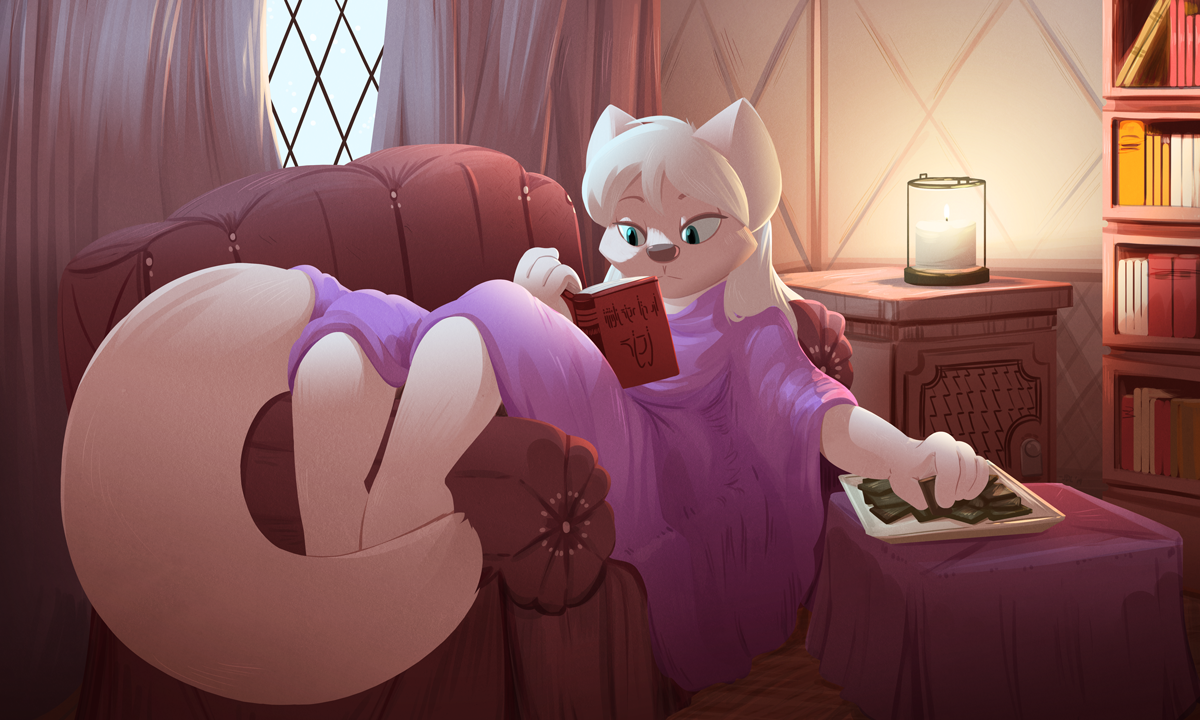
He even succeeds in all of this in his illustrative work!

jeff laclede digital art

jeff laclede digital art

If you haven’t read El-Indon yet, you should. While you’re at, go follow Jeff on Tumblr and Twitter. He’s loads of fun to follow.

Thank you for reading, and I will see you on Monday.

10,000 Mistakes and Why You Should Make Them

teapot set at focus exhibition bowling green state university
A pot from the FOCUS Exhibition at Bowling Green State University in 2008…or 2009.

As I’m writing this blog post I can’t help but think of all the posts I have written that have been scrapped. I have written and scrapped well over 20 blog post since I started updating consistently. I also made a video blog today, and scrapped that.

And it makes me feel like a failure because I’ve made these things and none of them work.

But there are little ideas within those failures that I feel like I want to revisit and build upon.

Today I want to talk about failure.

Failure is something that not a lot of people like to talk about. Some people actively encourage failure but they don’t talk about how that feels, and I’m going to say yes, it does suck.

It makes you feel like everything that you make is terrible, and if this thing you made is terrible then maybe everything else that you have made is awful too. It’s a quick path to beating yourself up and thinking you’re not good enough.

But you gotta take that energy (or what little you have left of it) and keep moving forward.

I’m actually (this will sound banana pants crazy) grateful that I failed today. Because even though I did fail in writing blog posts, I got an idea out of it, out of the things that I failed to make, and hopefully that will lead to a successful blog post or video blog.

It reminds me of the adage that was coined in my time as a caricature artist at Cedar Point. It was based off of the 10,000 hour rule.

There is a rule coined in the book Outliers that said if you practice something for 10,000 hours then you’ll become a master of it.

The caricature department took this and said when you start drawing caricatures you will draw 10,000 terrible faces before you draw a good one.

So get those 10,000 faces out now as quickly and as creatively as you can. Learn from them. Keep making terrible faces. And after 10,000 times you’ll start to get good.

I’m still making comics. I’m still making blog post. I haven’t quite reached the 10,000 benchmark yet for either of them but I have noticed that the more often that I do something, the better I get at it.

So the more blog post that I write the better I get at writing them. The more comics that I make the better I get at making comics.

Not every comic or blog post has to work, but you have to get it out of your system. Because once you get the bad work out of the way you move on to the next thing. And maybe the next thing will be good.

This conundrum of failure, and making 10,000 of something before you can get good, reminds me of a scenario from the book Art and Fear by David Bayles and Ted Orland. The scenario took two sets of pottery students. The professor told the first set of students they had a whole semester to make one very good pot. Then they told the second set of students they had to make as many pots as possible. This was done to see who would make the better pots – the students who focus on one pot the whole semester or the students who made as many pots as they could.

teapot from FOCUS exhibition bowling green state university
From the FOCUS exhibition at Bowling Green State University in 2008…or 2009.

They found that when students focused on making the perfect pot, the pots actually turned out worse. Because the students spent all of their time agonizing over how to make the pot perfect, artistically and aesthetically, and didn’t actually make it until the very end.

However, when students were encouraged to make as many pots as possible, they found that the more pots students made, the more great pots they had at the end. Not every pot was a masterpiece, but they had more great pieces than the students who made only one pot after agonizing over how to make it perfect.

And if you take anything away from this, I hope it’s that: that torturing yourself over making something perfect is not worth it.

Because there’s another masterpiece waiting for you, within you, already.

So make as much work as you can. Make as many mistakes as you can. And keep creating.

Because with every mistake you make, you’ll also make something brilliant.

Thank you for reading, and I’ll see you tomorrow.

Yes, There Are Cliques in Comics

“How do I break into comics?”

There’s lots of advice out there for breaking into the comics industry, but the most popular idiom is “Are you making comics? Then congratulations! You’re in the comic industry!”

But thanks to a Twitter conversation I was a part of recently, I’m starting to approach this question from another angle.

The tweet that started the conversation was…

That’s something a lot of comic artists will NOT tell you. Because yes, there are cliques in comics, and yes, it can seem like there’s a frat-boy mentality going on.

This is especially noticeable if you are, or identify as, a woman, because some cliques will treat you very differently and talk to you in different ways.

For example, I was part of a circle for a while, and in this circle was an editor (who will remain nameless, as he’s not really in the comics scene anymore). I was talking about how to attract more attention to your table in Artist Alley, when this editor suggested, “Just show off your boobs!”

I don’t talk to this guy anymore.

There’s tons of stories like this, some mild (like mine), some nightmare-ish.

However, not every comics group is like this.

From what I have observed from conventions and conversations online, it seems that there are at least 11 broad cliques in comics. Yes. 11 of them. They are…

Tired Comics Veterans – you can tell who these guys are because they tend to be over the age of 40, still drawing superheroes, decrying the presence of cosplayers.

Enthusiastic Comics Veterans – few and far between, as many comics veterans are quite jaded. Those who are not, though, are an…interesting bunch.

Children’s Comics Creators – While I haven’t met very many people in this clique, they tend to be female (though not always). They aren’t afraid to branch into unusual products to sell with their comics, like plushies. These people tend to be the nicest.

Webcomic Creators – perpetually broke but love the comics medium, and will talk about comics with anyone eager to chat with them. They are also eager to please, and are easily amused.

Webcomic Creators That Make Money – the rarest unicorn in real life and on the Internet. They discourage anyone else from making comics because they KNOW it is a slow, soul-torturing slog.

OEL-Manga Creators – are slowly dying out and phasing into other cliques. Those who stay within this clique are hardcore and know little of what’s going on outside of their circle.

Artists for the Big 4 – The Big 4, in this instance, are Marvel, DC, Image, and Dark Horse. Cannot be approached by mere Muggles. In fact, you’re not 100 percent certain they’re real, because you never see them and you only hear about them through podcasts and seeing their names on comic books. They might as well be Yetis.

Indie Comics Creators – the most nebulous bunch, as “Indie” is defined differently according to each person, and even each clique. The Indie crowd can be seen most often at small-press conventions and in Canada (why? No one knows, but there are many theories). Generally seen as standoffish and pretentious, and while many of them are, a few don’t mean to be.

Lonely Self-Publishers – think they are Artists for the Big 4, or even aspire to join that clique. Tend to gravitate towards places that Artists for the Big 4 hang out. Usually in desperate need of going to art school, but refuse to for a variety of reasons, none of which are excusable. Often do way more work than they should. They also hang out with…

Pin-Up Artists – draw all pin-ups and only pin-ups. Could not tell a story to save their life. Usually they have someone else do the talking for them, as they are too soul-crushingly awkward to talk themselves. But there’s a gem of a story within them that aches to come out, even if that story is a terrible one.

And finally…

Small-Press Zine Creators – a strange little group that branched off the Self-Publishers who don’t want to become an Artist for the Big 4, but tell stories too strange, personal, or downright awful to be considered an Indie Comic Creator. Small Press Creators tend to be hobbyists, and many of their works are passive-aggressive jabs at their day job, or autobiographical works.

Of course there are cliques within cliques. That’s what happens when people of like minds gravitate towards each other. There will also be groups of people who are just assholes. With this new-found knowledge, you must remember:

You cannot be friends with everyone, and you should not be expected to. You are the master of your choices, and you choose the people you hang out with. So choose wisely and thoughtfully.

So when I hear somebody say “I want to break into the comics industry,” do you mean actually making comics, or finding a clique that’s right for you?

Thank you for reading, and I’ll see you tomorrow.
I Was a Librarian

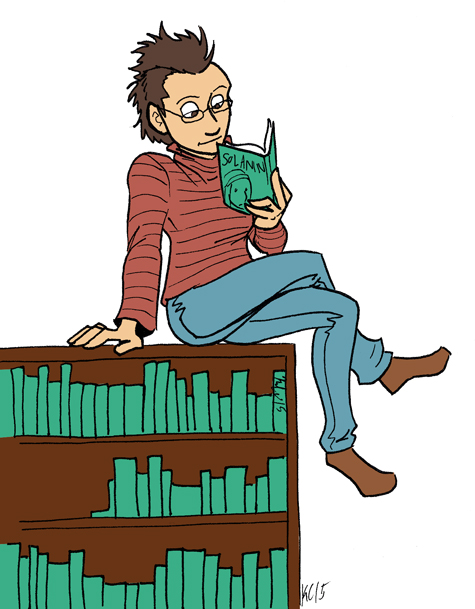
librarian selfie with books art sketch
(Click to enlarge)

Yep.

My first ever paid job in high school was being a librarian. Technically, I was a page, so my job was to re-stack books, DVDs, CDs, and other stuff people checked out and returned.

The cool thing was I was a page at a time when libraries just caught on to the idea that graphic novels were cool. So the graphic novel section was growing and getting all kinds of cool additions. This was how I was exposed to works like Cairo by G. Willow Wilson and M.K. Perker (which I reviewed here), Paradise Kiss by Ai Yazawa, and (most importantly) Making Comics by Scott McCloud.

I, as a page, was also supposed to clean up small messes. I have found many strange things in my time as a page, from abandoned wallets to an ash tray that was ripped out of a truck. But that’s a story I’m going to get into…right now.

I was sorting in the large print section when I found this aforementioned ash tray. And I was really confused. So I took it to the sorting room and approached the other librarians, saying “I found this weird ashtray. What should I do with it?”

My manager in her corner office said “BURN IT!” But one of the other ladies said she would hold on to it until someone claimed it. After all, it was an ash tray that belonged in a car. Someone should get it, right?

Ten minutes later I’m back in the large print, moving onto Non Fiction next to it, when a greasy guy in a leather jacket approaches me, looking nervous, saying, “Uh…did you by chance see an ash tray around here? It’s for my truck.”

True Facts.

Anyway, I was a page for two years until I graduated high school and went to college.

For a semester I had a minor in Pop Culture (because Bowling Green State University, my alma mater, was one of the few schools that offered classes in Pop Culture studies).

While I was studying this oddball field, I worked at the Browne Popular Culture Library.

Yes, this was a thing.

It was a very cool thing, too. It carried all manner of comics and graphic novels, and they even had dime novels from as far back as 1910. There were movie scripts, posters, and a ton of Star Trek memorabilia (I heard the library has the largest private collection of Star Trek memorabilia carried by a library in the United States). There were also pulp magazines, though they were rarely, if ever, read… The pulp was so old they were kept in special boxes so the light would not damage them, and if they were ever handled, it was with gloves, so the oil on your fingers wouldn’t damage the pulp paper.

The library even carried copies of the original elvish dictionaries written by J.R.R. Tolkien himself.

So with all of this awesomeness within our walls, you would think we were slammed with people.

But there was a catch: The Browne Popular Culture Library is what librarians call a “closed-stack” library. That means everything was kept behind closed doors, and if you wanted to check out anything, you had to fill out a form and a librarian (like me) had to run back and fetch it.

We had our catalog online, which is how you can find books in the Pop Culture Library in the first place. But once you got the book, it wasn’t allowed to leave the floor.

So…no, there weren’t a lot of people clammoring for the books there.

My time there was short, but I enjoyed it. It was the job that got me into comics as a cultural force, rather than comics as throwaway entertainment.

Because the cool things was: I saw a ton of old AND new comics in that library. I saw the original pulp magazines and dime novels.

And yes, the popularity of mediums changes. Dime novels aren’t really a thing anymore, and digest comics like Archie, I’m sad to say, are starting to lag.

But though the popularity of storytelling modes might change, the constant thing is that there are stories, and they are there, waiting to be read.

It’s fascinating to see the arc of popular culture history, seeing what was popular and what faded in favor of the next fad, and why the next fad was so huge.

Comics are, I dare say, the new fad in storytelling, because their potential is being rediscovered. Back in the 1950s, comics in the U.S. took a giant leap backwards (that’s a VERY long story I’ll save for next time), and since then comics as a medium in the U.S. has been playing catch-up with the rest of the world.

Comics are reemerging as a fad, and I would say that’s a good thing. It’s an artistic medium that deserves to be created with, studied, and read.

How long will that fad last? I don’t know. Tell me what you think in comments.

Thank you for reading, and I’ll see you tomorrow.
The Character Designs for Johnson & Sir

So in Part 1, I talked about character design in comics, and what doesn’t tend to work. In Part 2, I talked about some character designs in practice in Validation and other personal works.

Today I would like to look at more character designs and how they can reflect or embody elements necessary to the story.

Let’s look at some characters from…Johnson & Sir.

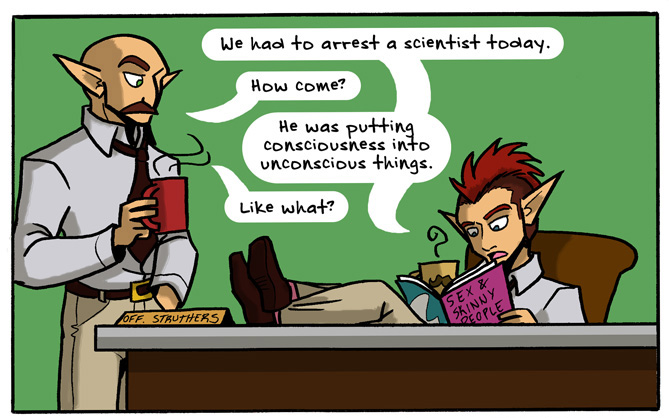
johnson and sir clip from page 51
A scene from Page #51, “My Conscience is Rising”.

Johnson and Sir are two opposites: Sir is the busybody tough guy who plays by the rules and runs a tight ship. Johnson is a relaxed joker who figuratively pokes the bear (the bear being Sir) to make him lighten up and joke more.

Sir is well-kept and nicely groomed. His mustache is always perfect and he’s almost always standing up straight and in-charge.

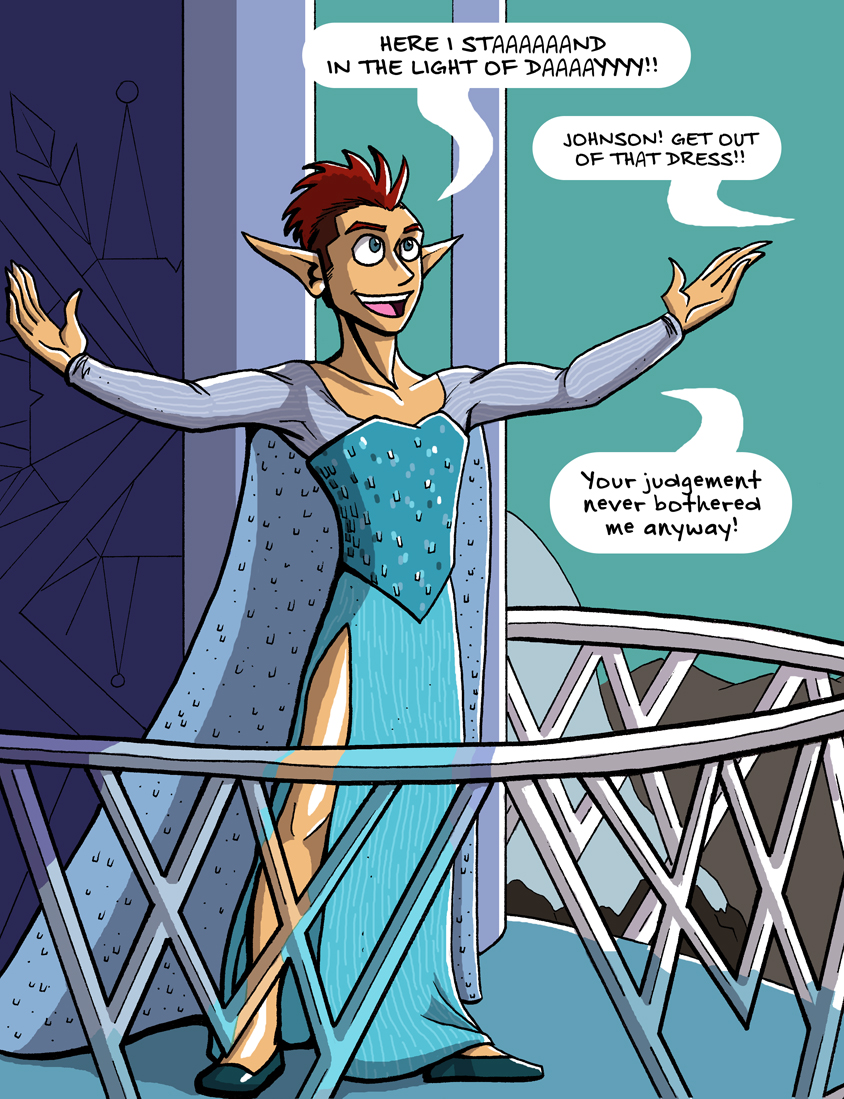
Johnson…

He's not afraid to embrace his inner Elsa.
He’s not afraid to embrace his inner Elsa.

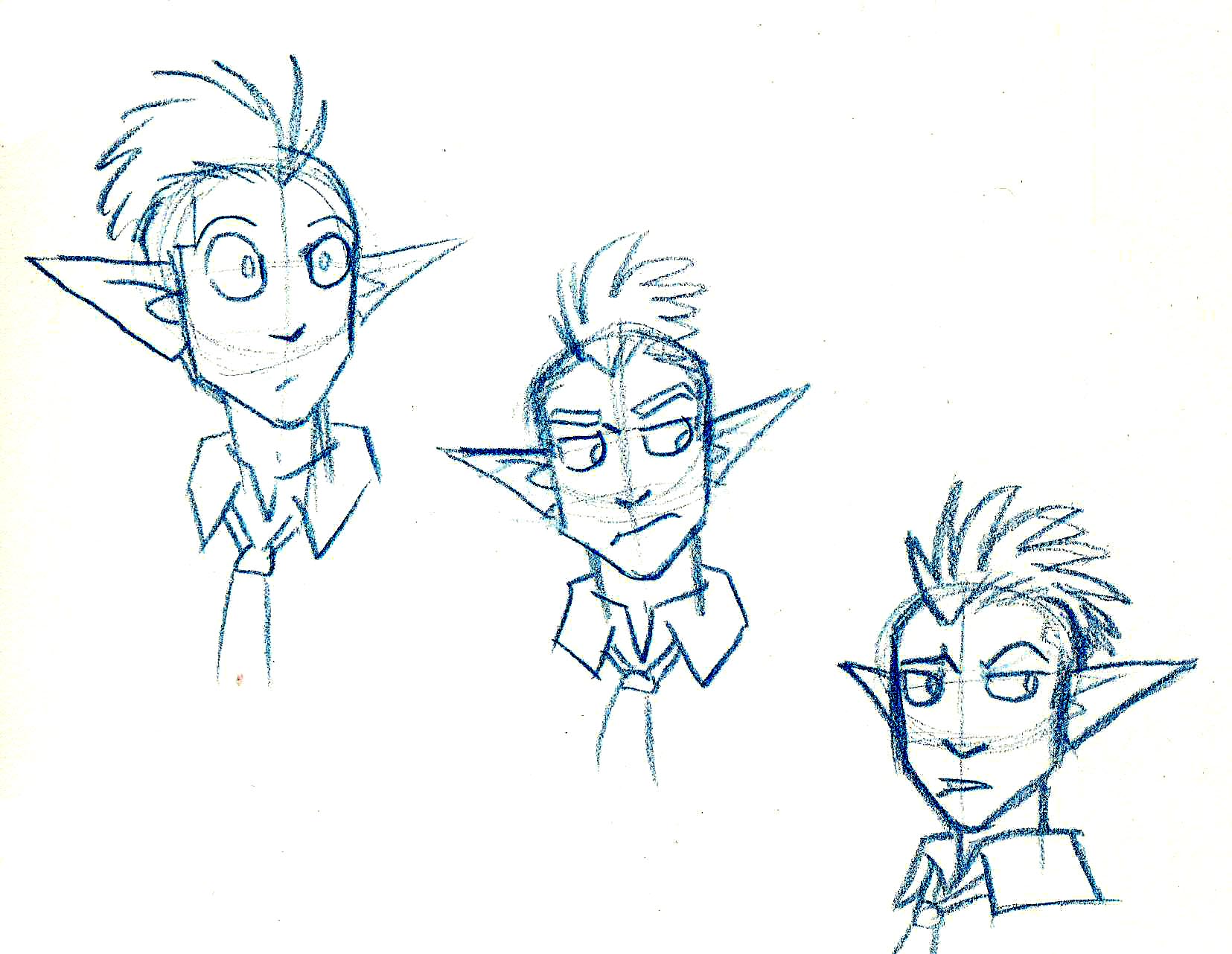
Johnson loves his dresses and is not afraid to wear them. He’s willing and able to break the expectations of society. He LOVES to do so. To match his flamboyance, he has wild hair and crazy facial expressions. While Sir is stoic, Johnson isn’t afraid to wear his heart on his sleeve.

johnson and sir johnson faces
Just a small sampling of Johnson’s faces.

Of course, in the Fantasyville Police Force, there are characters that match up with Johnson and Sir, serving as mirrors.

Mirror characters are not new or even rare. Mirror characters are those who have the same experiences or functions of the main characters, but can oppose them in some way.

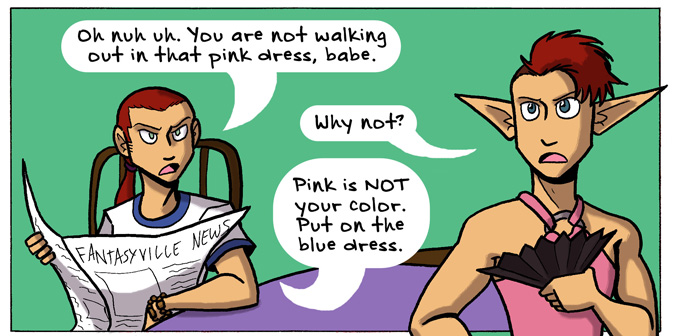
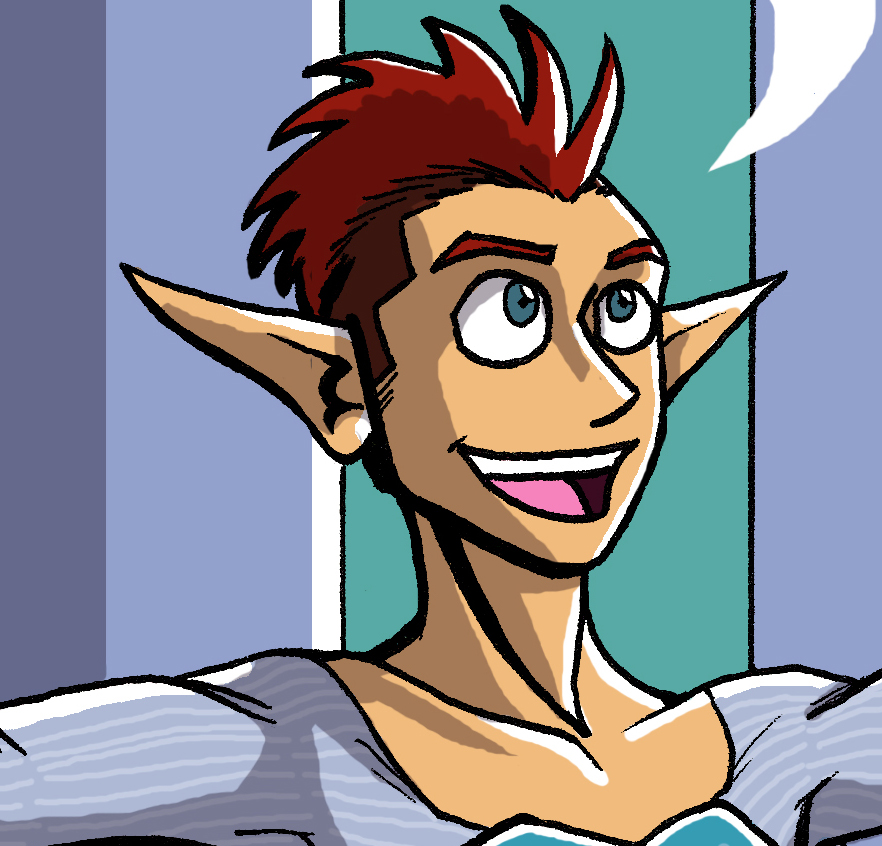
For example, Ackles is a mirror for Johnson.

johnson and sir ackles
Here’s Ackles being reasonable with Johnson, from page #54, “The Elf and the Wardrobe.”

Ackles is the nice in-between of Johnson’s heart with Sir’s rationale. Ackles is reasonable but accepting of the absurdity in Johnson’s attitudes. He’s not as by-the-book as Sir is, but he still follows the rules that society has placed, for the most part. He’s not all-knowing – in fact, he’s still new to the job as a police officer, and asks a lot of questions. He’s the naive curiosity to Johnson’s experience. His naivete and curiosity are what drive him to go adventuring with Johnson and do silly, absurd things.

To reflect these characteristics in his design, he has a well-groomed image like Sir, hair that doesn’t meet societal expectations like Johnson’s, and wide, emotional and curious eyes.

So now we know about Johnson’s mirror character, Ackles. Who is Sir’s mirror character?

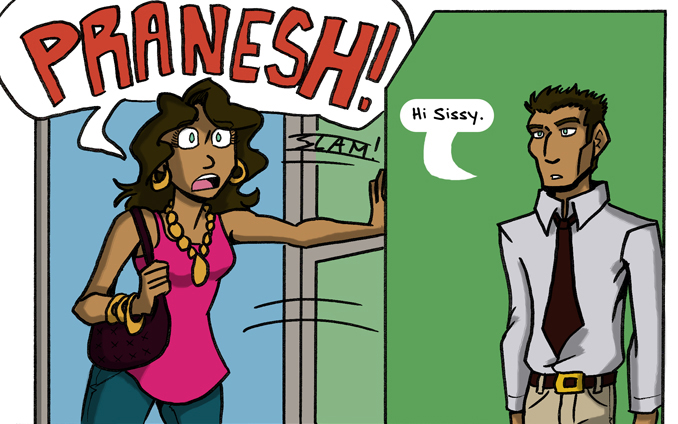
Pranesh.

johnson and sir pranesh and sissy page 49
Pranesh and his sister chat in #49, “What a Worrywart.”

Pranesh hardly ever speaks until the Haiku Flu arc. He’s a man of few words and somber actions. He doesn’t do exaggeration like Johnson or Ackles do. He’s a quiet, determined sort of man. That’s why he has the strong chin and jaw, the broad shoulders, the high cheek bones, and the tired eyes. He’s seen things, but he carries on in his quiet way. Like a superhero.

Pranesh is much like Sir in his stoic nature and ramrod-straight posture. He carries himself with dignity, like Sir (for the most part) does.

But Pranesh is a bit too stoic. We don’t see him smile. He hardly ever jokes, unless it’s in a deadpan, dry way.

pranesh from johnson and sir
Pranesh also has some mystical powers of some sort, man.

He serves as the mellow contrast to those rare moments when Sir unwittingly lets an emotion loose, like humor or fear.

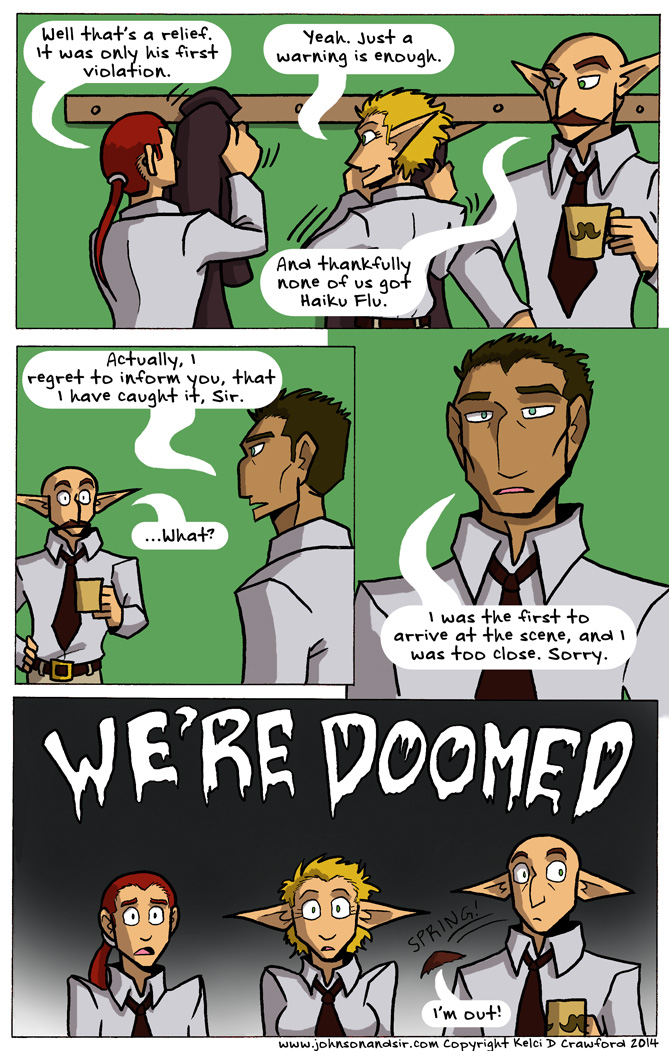
johnson and sir page 61
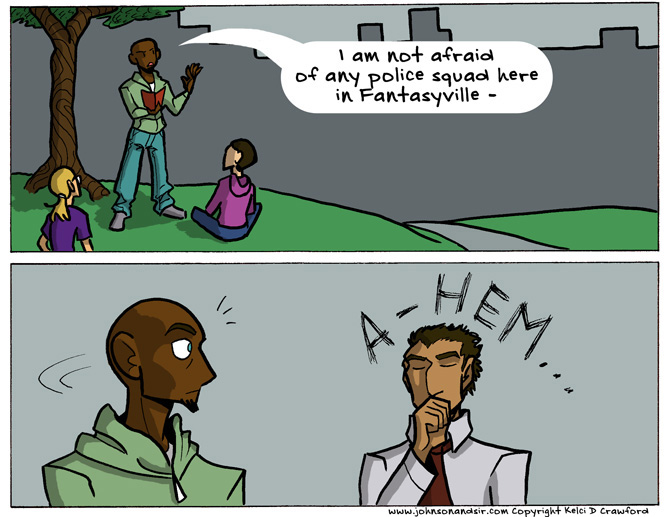
Page #61. Sir is so horrified even his mustache flees in terror!

While Ackles is complimentary to Johnson, Pranesh is almost a caricatured personification of Sir’s dryness. He is what Sir COULD become, if it weren’t for Johnson poking him with the metaphorical silly stick.

So in designing these characters, everything plays a part – their facial expressions, their posture, their body language, their hair and clothes (when they’re not in police uniform). Keep these factors in mind when you create your own characters for comics and, hopefully, your characters will become much more real.

johnson and sir johnson elsa frozen caption
Let’s end this blog post on a high note.

So did you like this 3-part series? Would you like me to keep talking about character design for comics? What have you learned from my ramblings about character designs? Leave your thoughts in comments below!

Also! Did you like Johnson expressing his inner Elsa? Because you can get it as a print to hang on your wall! Or your friends’ wall. Or wherever people need to burst into motivational song.

This blog post was the last one in a week of daily updates. Thank you to everybody who read my posts everyday! I’ll see you on Monday.